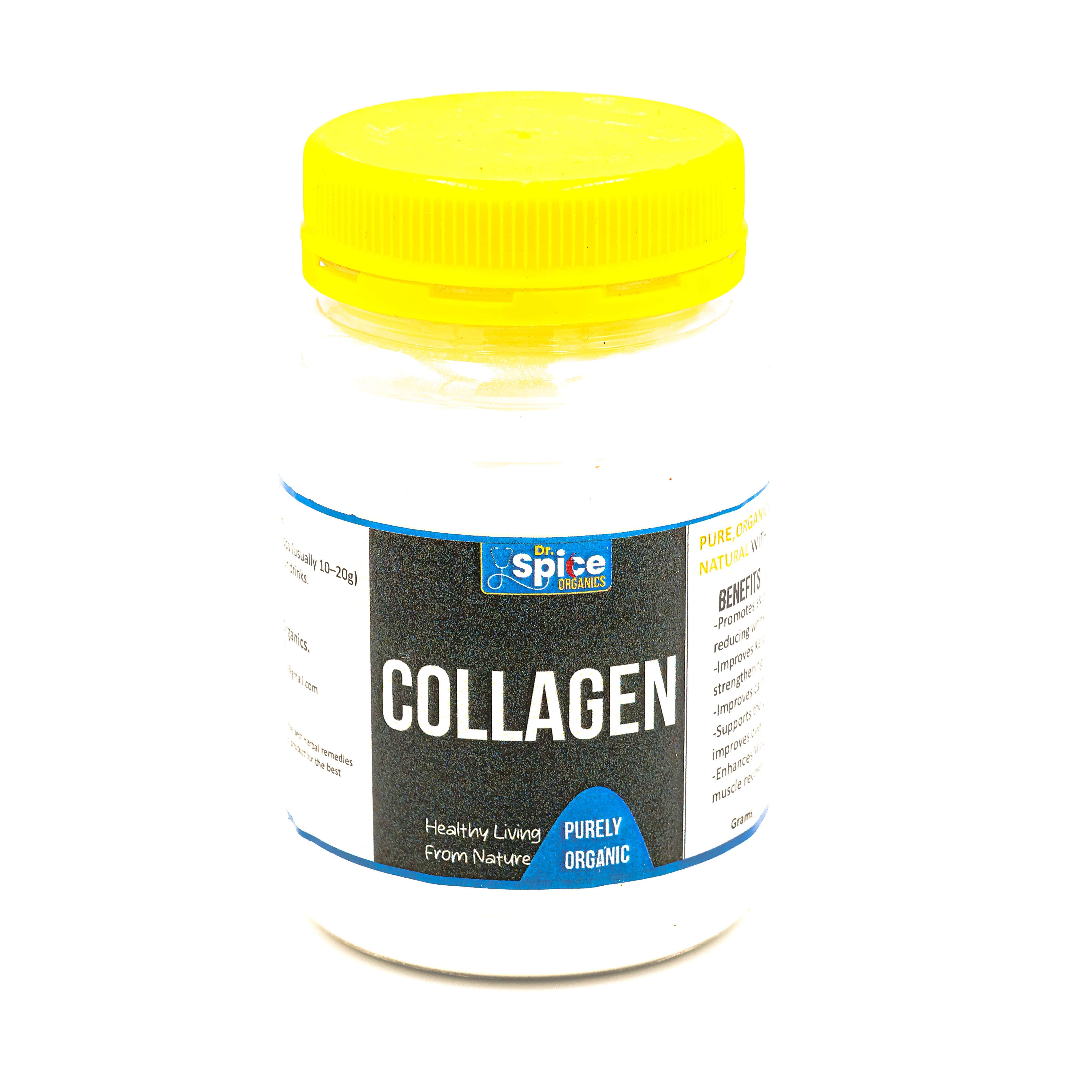

Description
Hydrolyzed Collagen Peptides (Collagenus hydrolysatus) are bioactive protein fragments derived from enzymatic hydrolysis of type I/III collagen sources (marine or bovine), standardized to a molecular weight distribution of 2–5 kDa to optimize intestinal absorption via the PEPT1 transporter system. Our formulation undergoes low-temperature enzymatic hydrolysis (protease-mediated, pH-controlled) to preserve the triple-helix-derived peptide sequences—particularly Pro-Hyp, Gly-Pro-Hyp, and Hyp-Gly—which function as signaling molecules to stimulate fibroblast proliferation, collagen synthesis, and extracellular matrix remodeling.
The bioactivity of collagen peptides is mediated through multiple mechanistic pathways: (1) Fibroblast Activation: dipeptides and tripeptides bind to integrin receptors on dermal fibroblasts, upregulating COL1A1 and COL3A1 gene expression via TGF-β/Smad signaling; (2) Chondrocyte Support: Pro-Hyp peptides stimulate type II collagen and aggrecan synthesis in articular cartilage through MAPK/ERK pathway modulation; (3) Gut Barrier Integrity: Glycine-rich peptides support tight junction protein expression (occludin, ZO-1) and mucin production via Nrf2-dependent antioxidant upregulation; (4) Bone Matrix Support: Collagen-derived peptides provide a scaffold for hydroxyapatite crystallization and stimulate osteoblast differentiation via Runx2 activation.
Each batch is quantified for hydroxyproline content (HPLC-UV, ≥10% w/w) as a marker of collagen integrity, verified for peptide size distribution (SEC-HPLC), and screened for heavy metals, microbial contaminants, and allergens per pharmacopeial standards. Sourced from sustainable, traceable supply chains with full-chain documentation.
Benefits
• Dermal Collagen Synthesis & Skin Elasticity Support – Oral ingestion of hydrolyzed collagen peptides (2.5–10 g/day) increases dermal collagen density and reduces matrix metalloproteinase-1 (MMP-1) activity, improving skin elasticity and reducing wrinkle depth in randomized, placebo-controlled trials (Proksch et al., Skin Pharmacol Physiol 2014; Zague et al., J Med Food 2018).
• Articular Cartilage Matrix Support – Pro-Hyp and Gly-Pro-Hyp peptides stimulate chondrocyte production of type II collagen and aggrecan, reducing cartilage degradation markers (CTX-II) and improving joint comfort scores in osteoarthritis populations (Bello & Oesser, Curr Med Res Opin 2006; Clark et al., J Agric Food Chem 2008).
• Bone Mineral Density & Matrix Integrity – Collagen peptides provide the organic scaffold for hydroxyapatite deposition; clinical studies show improved bone turnover markers (PINP, CTX) and BMD in postmenopausal women with combined collagen + calcium/vitamin D supplementation (Elam et al., Nutrients 2021).
• Gut Mucosal Barrier Support – Glycine and proline-rich peptides support tight junction integrity and mucin-2 production, reducing intestinal permeability markers (zonulin, LPS) in models of gut barrier dysfunction (Wang et al., Amino Acids 2013).
• Muscle Protein Synthesis Synergy – Collagen-derived glycine and arginine support creatine synthesis and may augment resistance training-induced muscle accretion when combined with leucine-rich proteins (Clifford et al., Br J Nutr 2019).
• Nail & Hair Keratin Support – Increased nail growth rate and reduced brittleness observed in clinical trials with daily collagen peptide ingestion, likely via enhanced keratinocyte proliferation and cystine incorporation (Hexsel et al., J Cosmet Dermatol 2017).
Dosage Instructions
• Skin Elasticity & Anti-Aging Protocol: Consume 10 g hydrolyzed collagen peptides dissolved in 200 mL water or beverage once daily, preferably on an empty stomach or with vitamin C (50–100 mg) to support prolyl hydroxylase activity. Minimum intervention period: 8–12 weeks for measurable dermal collagen changes.
Ingredients
Active Pharmaceutical Constituent:
• Hydrolyzed Collagen Peptides (Type I/III), standardized to:
Molecular weight: 2–5 kDa (≥90% by SEC-HPLC)
Hydroxyproline content: ≥10% w/w (HPLC-UV quantified)
Peptide profile: Pro-Hyp, Gly-Pro-Hyp, Hyp-Gly ≥5% combined (LC-MS/MS verified)
Protein content: ≥90% w/w (Kjeldahl method)
Source Specification:
• Marine-derived (Piscis collagenus): Sustainable wild-caught fish skins, traceable to FAO-certified fisheries
• OR Bovine-derived (Bos taurus collagenus): Grass-fed, hormone-free hides, BSE/TSE-free certified
Analytical Verification:
SEC-HPLC: Peptide size distribution profiling
HPLC-UV: Hydroxyproline quantification (post-acid hydrolysis)
LC-MS/MS: Signature peptide sequencing (Pro-Hyp, Gly-Pro-Hyp)
Microbial limits: USP <61> compliance (<10³ CFU/g total aerobic count)
Heavy metals: ICP-MS screening (<1.0 ppm Pb, <0.1 ppm Cd, <0.5 ppm As, <0.5 ppm Hg)
Allergen screening: ELISA for fish, beef, or porcine residues as applicable
Processing & Stability:
Enzymatic hydrolysis at 45–55°C, pH 7.0–8.0, using food-grade proteases
Spray-dried at inlet temperature <180°C to prevent Maillard degradation
Packaged in moisture-barrier, nitrogen-flushed pouches to prevent oxidation and clumping
Shelf-life stability verified per ICH Q1A guidelines (24 months at 25°C/60% RH)
Suitable For
• Adults seeking evidence-based support for skin elasticity, wrinkle reduction, or photoaging mitigation
• Individuals with mild-to-moderate osteoarthritis seeking cartilage matrix support and joint comfort
• Postmenopausal women or aging adults supporting bone mineral density and connective tissue integrity
• Persons with increased intestinal permeability or gut barrier dysfunction seeking mucosal support
• Athletes and active individuals supporting tendon, ligament, and connective tissue recovery
• Not indicated for: Pediatric populations, individuals with source-specific allergies (fish, beef), phenylketonuria without medical supervision, pregnancy/lactation (insufficient safety data)
You May Also Like
Slippery Elm (200g)
View Details
Epsom Salt
View Details
Chamomile
View Details